Commercial Roofing in Wagoner, OK
Roof leaks, worn membranes and replacement planning for Wagoner businesses. Start with the roof system, the condition beneath it and the work that keeps water out.
Commercial roof work in Wagoner starts with the building
Water over a work area can interrupt more than the ceiling finish. Stock, equipment and the people using the building all affect how roof work needs to be planned. The useful first step is to understand the roof assembly and the opening that is letting water in.
We inspect the surface and its interruptions: seams, equipment curbs, penetrations, roof edges and drainage outlets. A local defect in a sound roof is a different project from moisture trapped under a worn membrane. The visible leak alone does not reveal how much insulation or decking is affected.
Tell us how the building is used, where the leak appears and any access needs. A free roof inspection starts the discussion about repair, restoration or replacement.
Water has to leave a Wagoner commercial roof
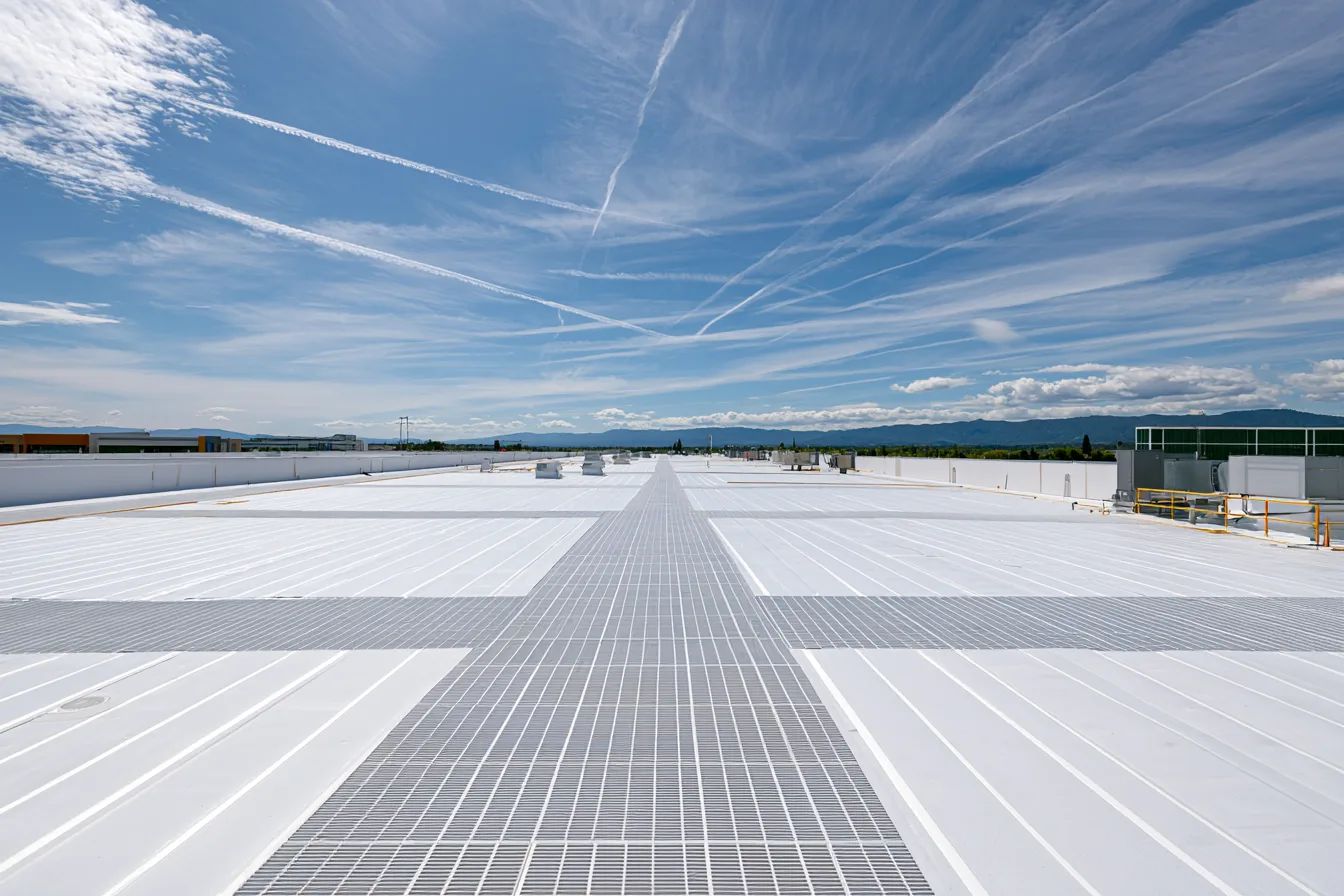
A low-slope roof still needs a drainage path. Membrane repairs and drainage work must account for the details that interrupt the surface.
Seams and the open roof surface
Separated seams, punctures and damaged membrane need repairs compatible with the existing material. A patch has to bond or weld to a sound surface; coating over an opening is not a substitute for rebuilding that detail.
Curbs and rooftop equipment
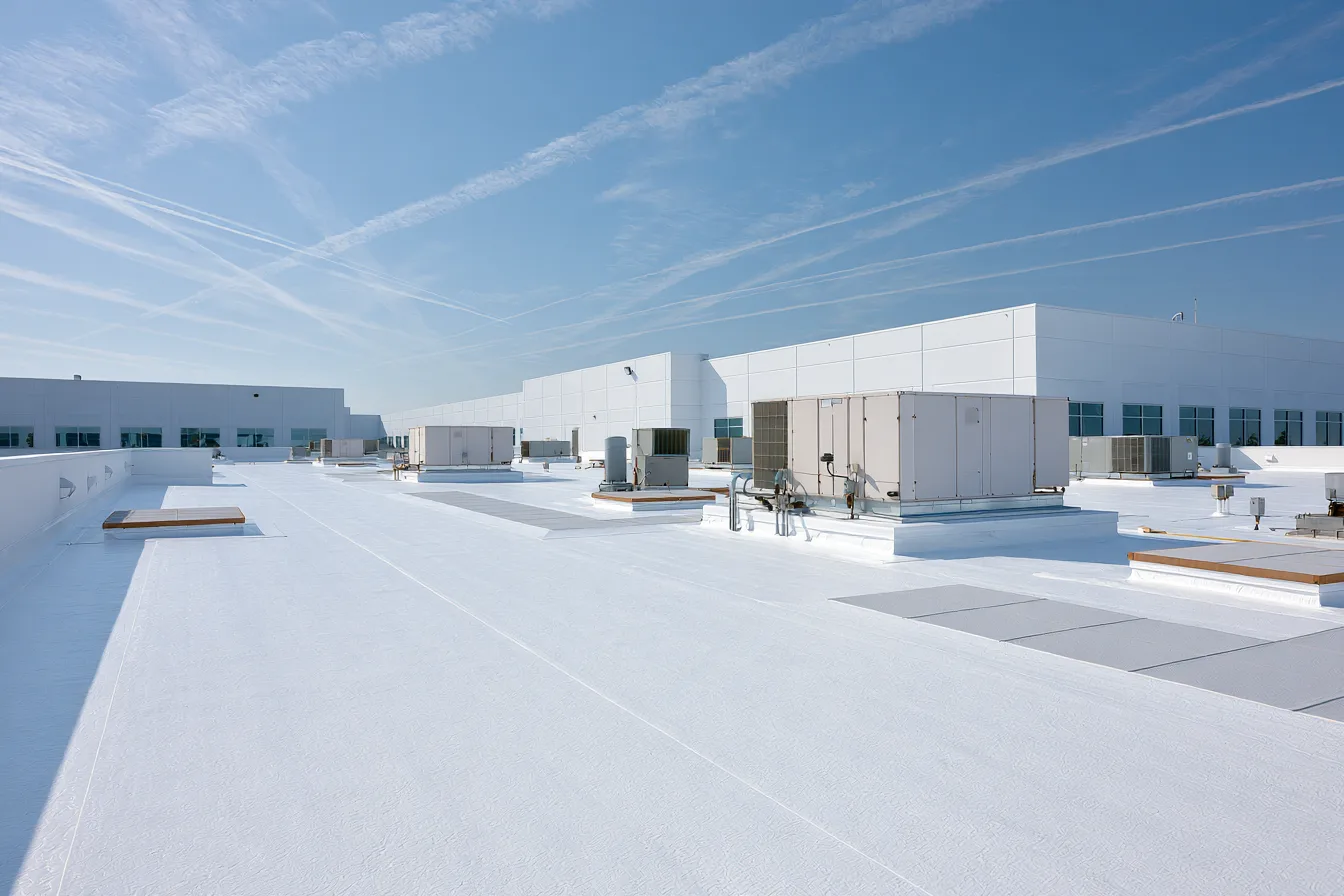
The membrane turns up around equipment curbs and other penetrations. Corners, terminations and changes in height need their own flashing. Roof leaks and equipment leaks can appear in the same indoor area, so the source needs to be identified.
Drains, scuppers and low areas
Water needs to reach an outlet and leave the roof. Debris at a drain, an obstructed scupper or a low area in the assembly can leave water behind. Repairing a puncture does not correct a drainage defect beside it.
Insulation and the deck below
Once water gets below the membrane, wet insulation can spread the affected area beyond the visible opening. The extent of that moisture matters to the repair. A dry-looking top surface does not establish that the layers underneath are suitable to keep.
Commercial roofing services in Wagoner
Choose the service by the system and the work it needs. These paths explain the details that change each option.
TPO Roofing
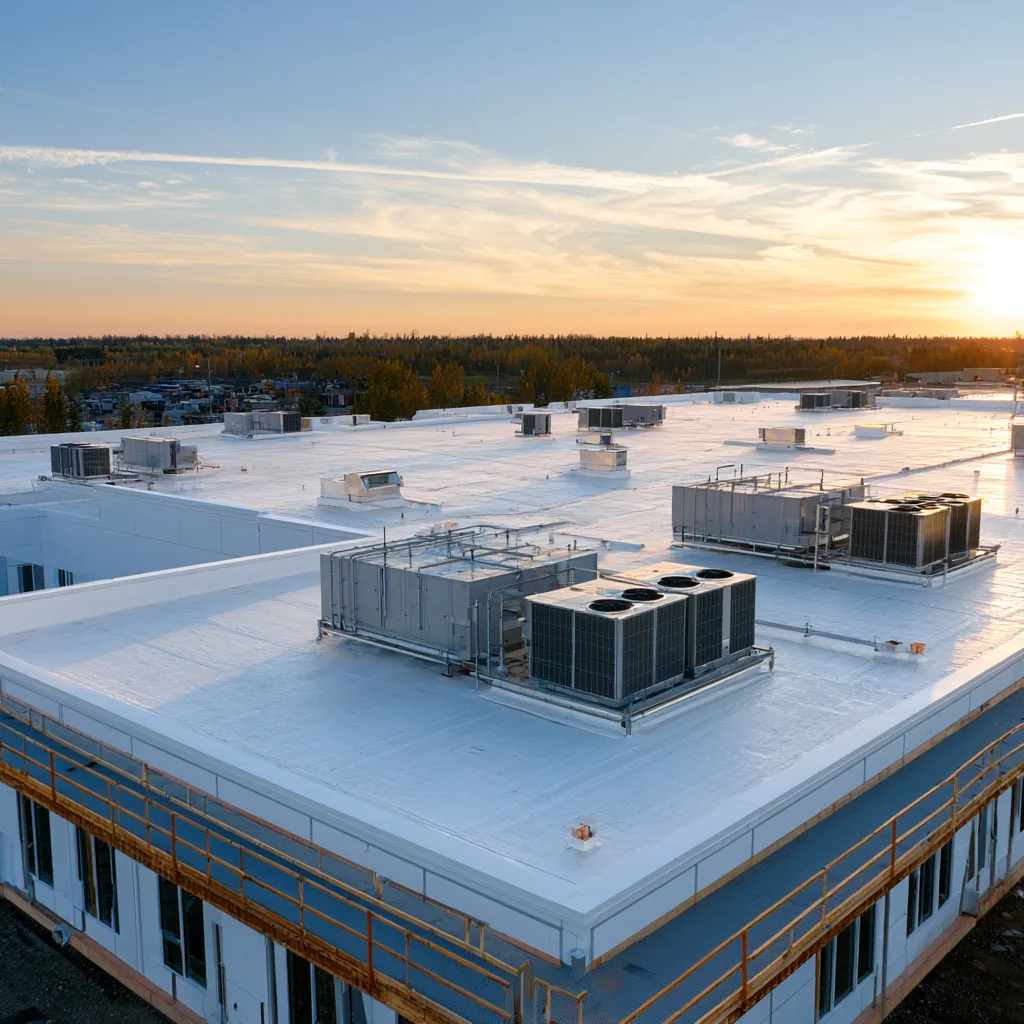
Heat-welded single-ply seams, curb flashings and attachment form one roof system. Repairs depend on compatible, workable existing membrane.
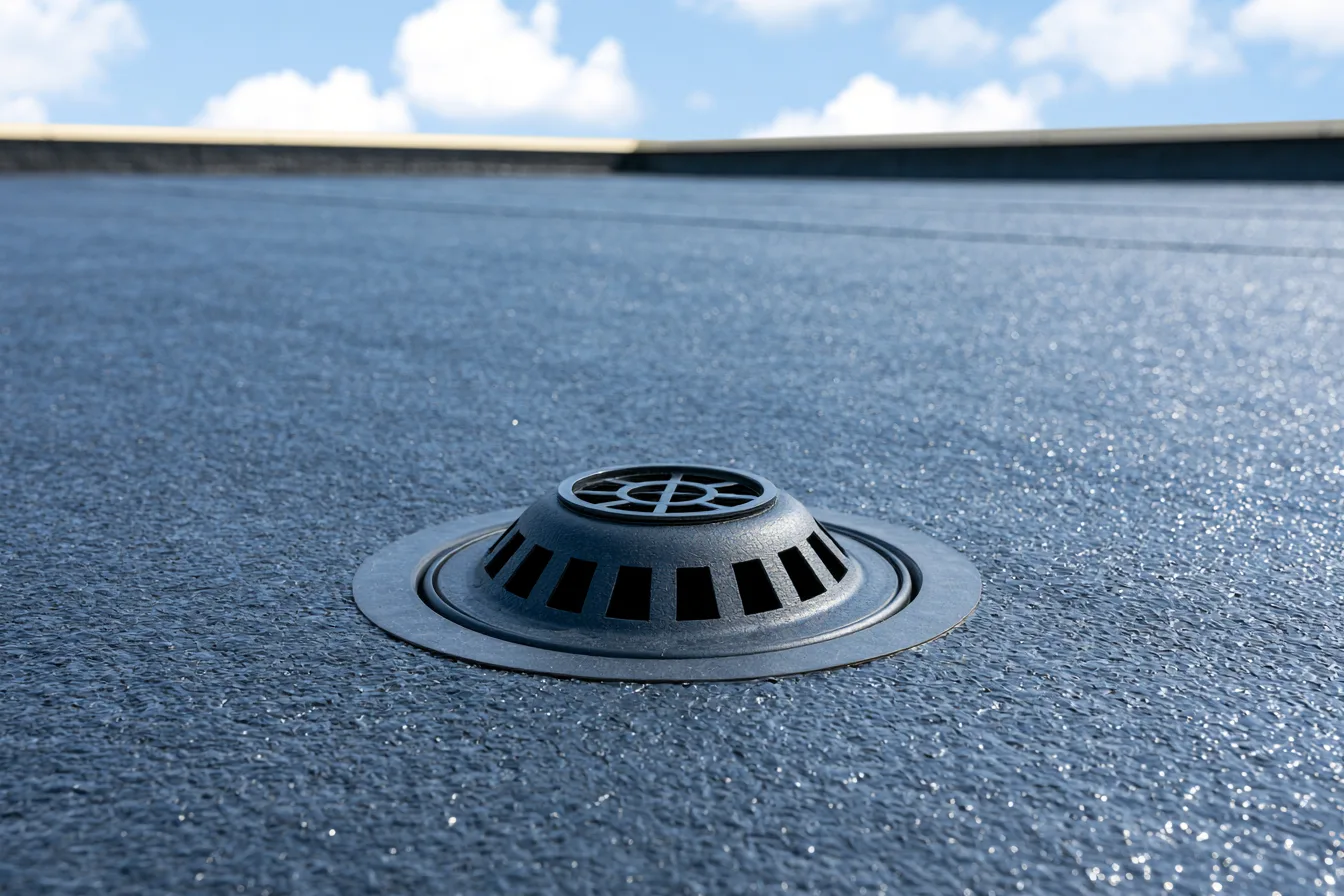
Flat Roof Repair
Repair an isolated leak and any affected layers, while checking how water reaches the drains or scuppers.
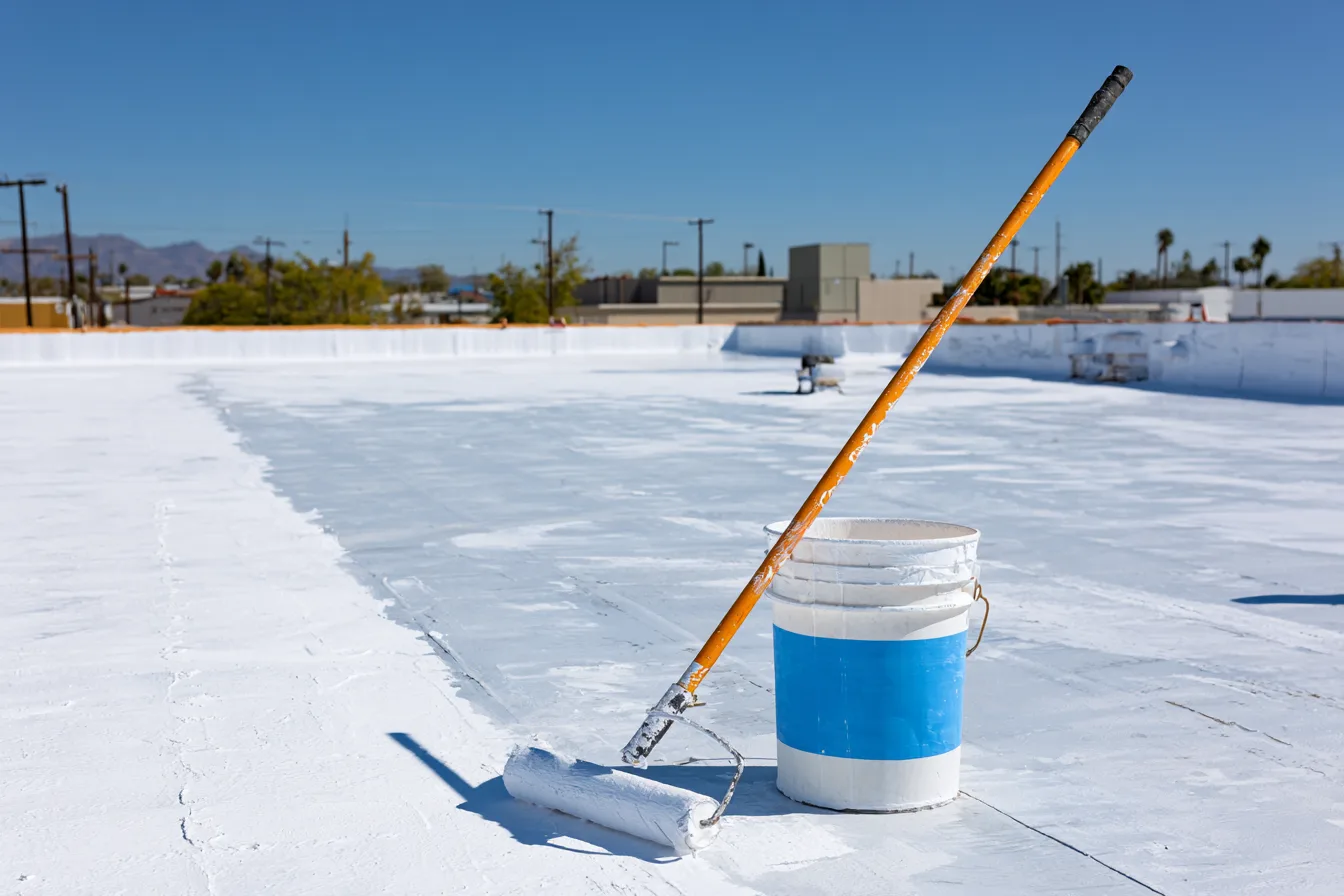
Roof Coatings
A suitable dry roof can be prepared and restored. Wet insulation, failed attachment or unresolved drainage changes that choice.
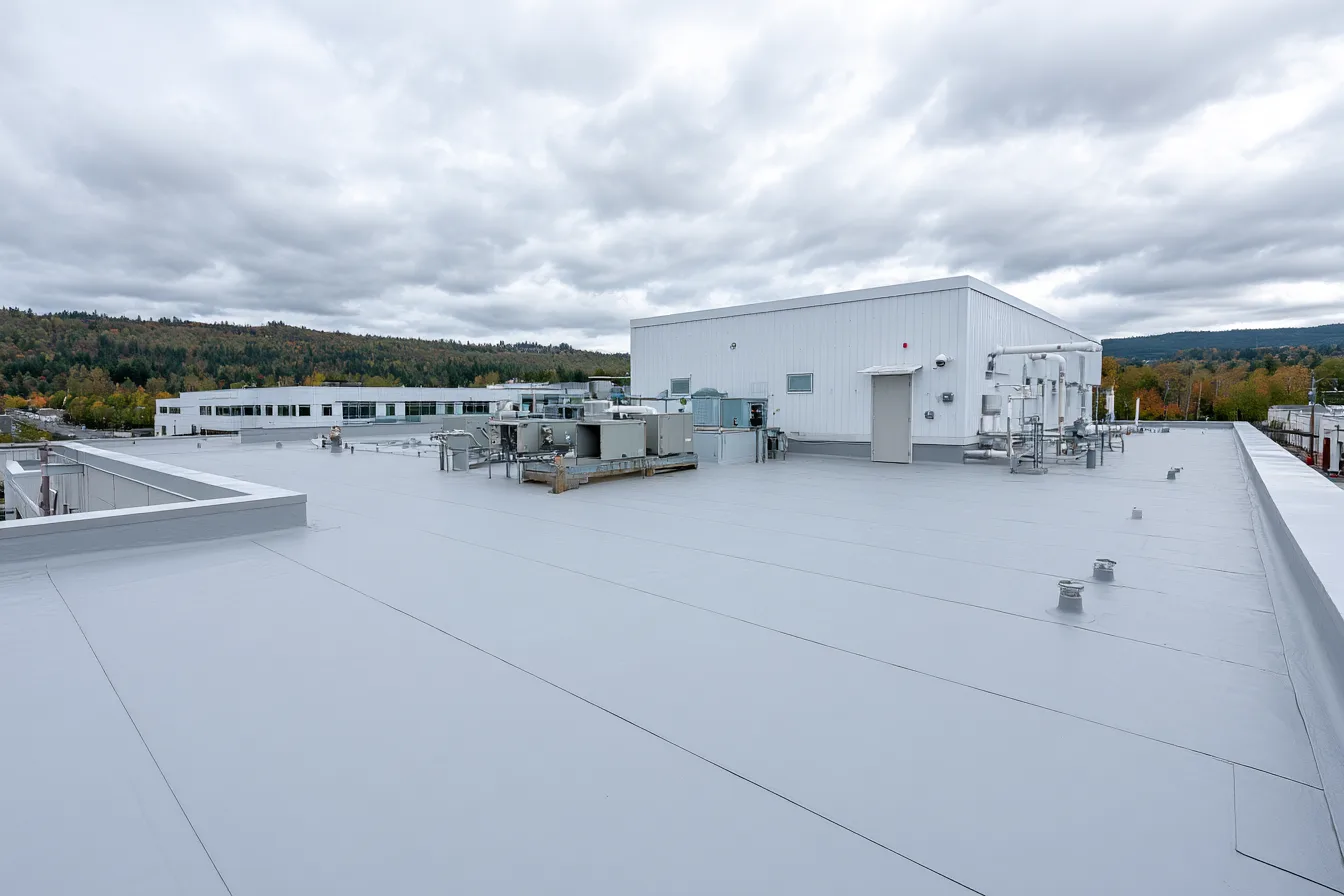
Flat Roof Replacement
Plan removal or a suitable recover assembly, insulation, slope and perimeter details around the building.
Repair, restore or replace the commercial roof
The condition of the existing assembly determines which option has a sound foundation.
Repair a defined failure
A sound roof with an isolated puncture, open seam or failed flashing detail can be a repair candidate. The repair needs compatible material and a secure connection to the surface around it.
Flat-roof repair also addresses damaged layers where water has reached below the membrane.
Restore a suitable existing roof
A coating needs a roof that can be properly prepared, repaired and bonded to. Moisture, adhesion, existing materials and drainage all affect suitability. Required detail work comes before the new coating.
Roof coatings do not turn wet insulation into a dry roof assembly.
Replace the failing assembly
Widespread wet layers, a failing substrate or damage that cannot be joined to sound material can make replacement the useful next step. That work can also address insulation and drainage as part of the new system.
A TPO roof is one system to discuss, with its own substrate, attachment and flashing requirements.
Plan roof work around the people below it
The roofing plan needs to work for the people using the property as well as for the roof itself.
Understand access and sensitive areas
Tenant entrances, loading areas and rooms with equipment or stock affect staging and protection. We need to know where the problem is occurring and who coordinates access to the roof and building.
Coordinate equipment and work areas
Rooftop units, service routes and penetrations can bring roofing and mechanical work together. Clear work areas and coordinated access help keep one trade’s work from damaging another’s roof details.
Plan the work sequence
Opening roof areas, managing exposed layers and restoring weather protection require sequencing around conditions. Whether activities inside need to change depends on the scope, hazards and the building’s use. That is part of planning, not an assumption that every business can operate unchanged.
What drives commercial roofing cost in Wagoner
A house-size shingle calculator cannot price a commercial roof assembly. The existing system and the details around it drive a different scope.
Wagoner commercial roofing FAQs
Can a leaking flat roof be repaired?
Yes, when the failed area can be repaired into a sound, compatible roof. The inspection also needs to consider wet insulation and drainage. Wider deterioration beneath the membrane can make the work larger than the visible leak.
Can a coating go over wet insulation?
No. A coating does not remove moisture from insulation or repair a deteriorated roof deck. Wet or unsound layers have to be addressed before a restoration option can be judged suitable.
Is a white roof always TPO?
No. TPO, PVC and some coated roofs can all have a light-colored surface. Identifying the existing material matters because repair materials and attachment methods must be compatible with that system.
Can the building stay open during roofing work?
That depends on the work and the building. Access, overhead hazards, noise, fumes where relevant and the areas being opened all need to be considered. Tell us about tenant entrances, working hours and sensitive spaces so the roof project can account for them.