TPO Roofing in Wagoner, OK
TPO roofing depends on the seams, flashings and layers beneath the membrane. Get repair and replacement help for a Wagoner commercial roof with the building’s use in mind.
TPO roofing for Wagoner commercial buildings
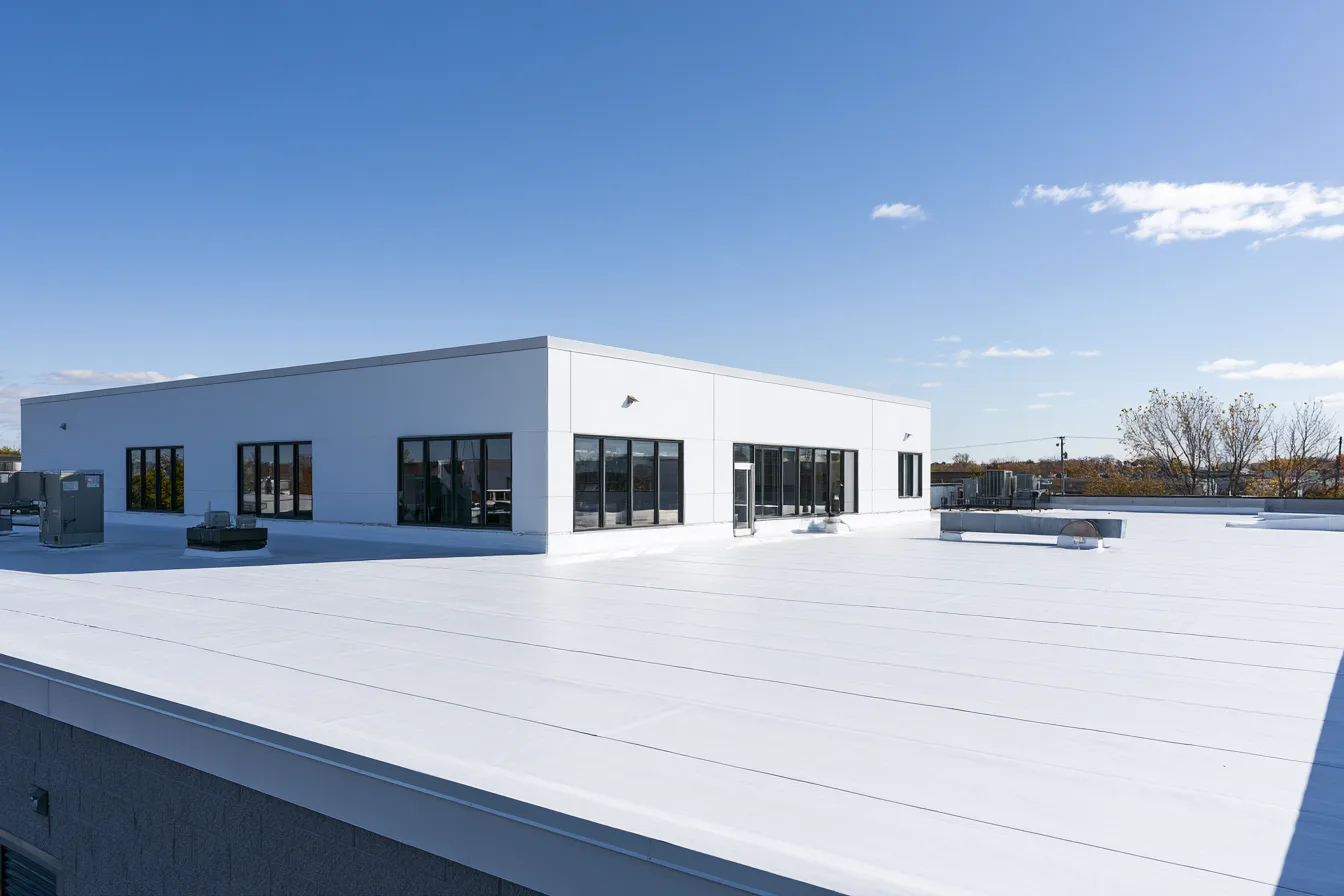
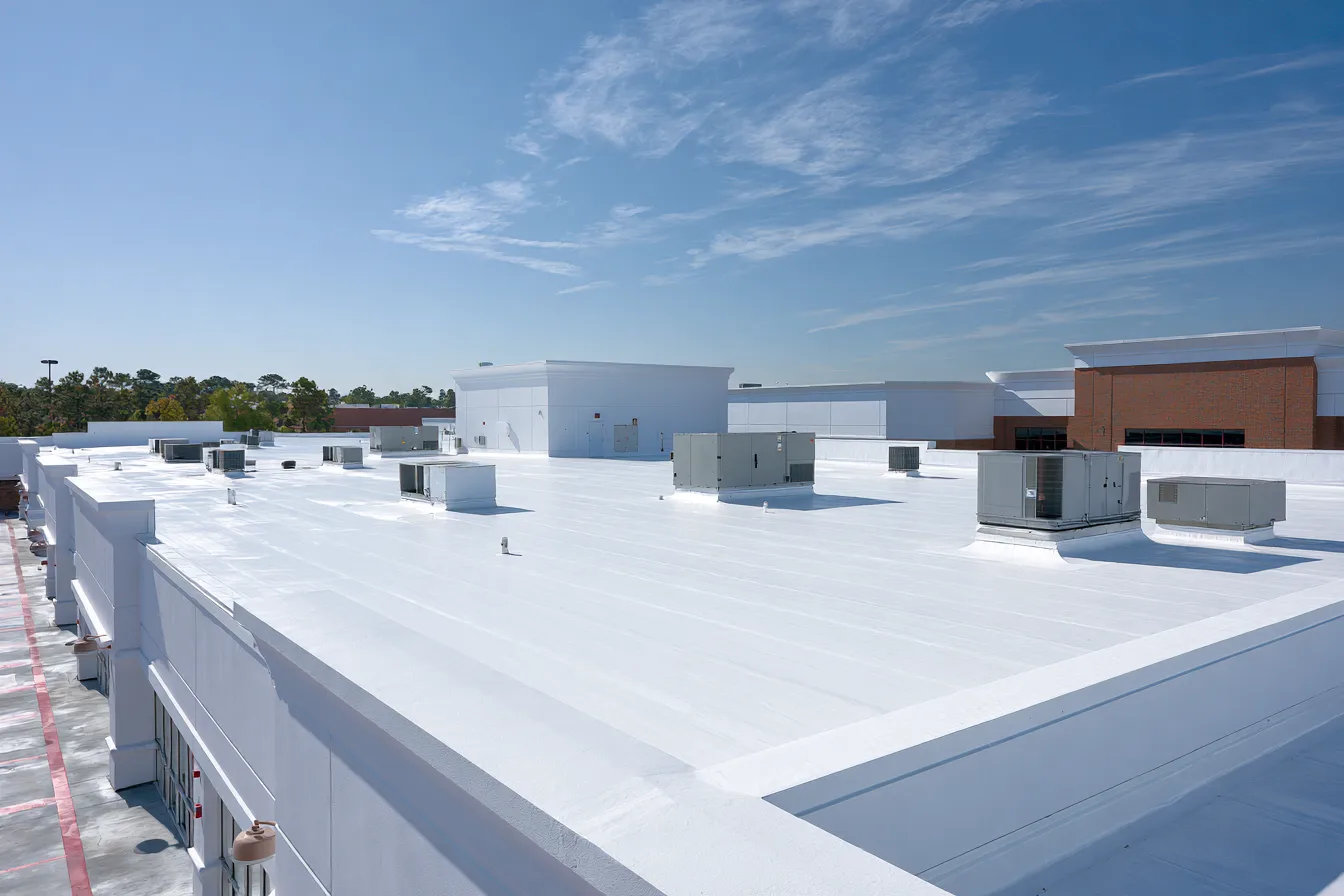
TPO is a thermoplastic single-ply roof membrane. Its sheets are joined with heat-welded seams, while the edges, penetrations and equipment curbs need their own connected flashing details. The white surface is only the most visible part of the system.
A leak may come from a puncture, a seam that has opened or a detail that no longer connects properly. We examine the material and surrounding condition before choosing a repair. A patch has to bond or weld to a workable surface and restore the detail’s function.
For a new roof, the deck, insulation, drainage and attachment need to be planned together. Tell us how the building is occupied and where water is affecting it so the roofing scope can account for daily use.
Where a TPO roof needs close inspection
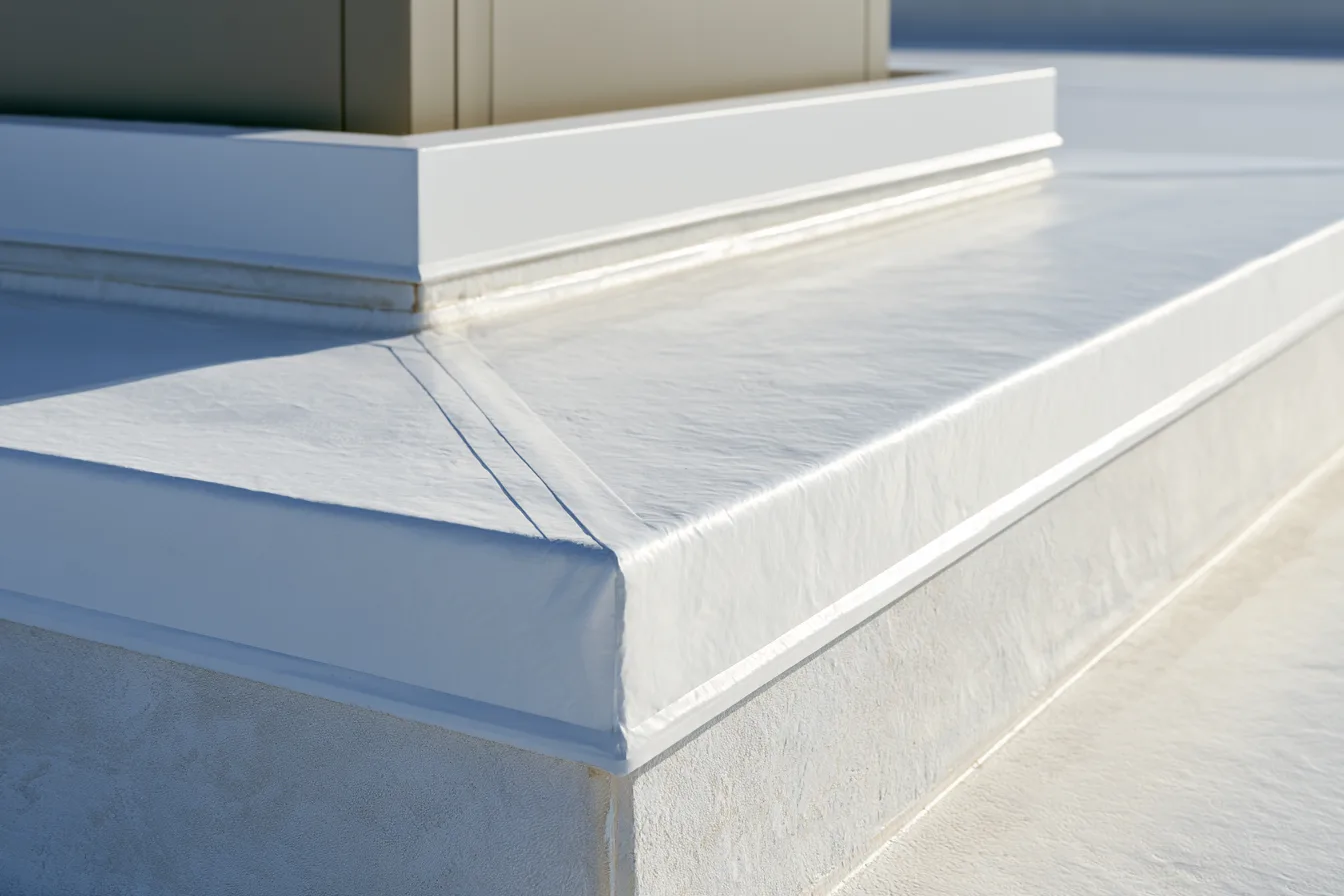
The membrane has to remain continuous around every interruption in the roof.
Seams and aged membrane
A seam repair depends on the condition and compatibility of the existing material. Dirt, weathering and previous patches can affect preparation and weldability. Repairing the visible edge without establishing a sound connection can leave the opening unresolved.
Curbs, corners and penetrations
Equipment curbs, pipes and roof access points need reinforced and correctly terminated flashing. A leak near a rooftop unit may come from the roof detail or the equipment itself. The source needs to be separated before either repair is priced.
Punctures and traffic paths
Dropped tools, service work or unprotected traffic can damage the membrane. A compatible patch may fit an isolated puncture when the surrounding assembly is sound. Walk pads and service access should be considered where equipment needs recurring attention.
Perimeters and drainage outlets
Edges, parapets, drains and scuppers are part of the roof system. Attachment and water flow matter at these locations. A successful seam patch does not correct an obstructed outlet or a low area elsewhere on the roof.
Repair the TPO surface or replace the assembly
A dry-looking surface does not establish that the assembly underneath is dry.
Repair a sound, local area
An isolated defect can be repaired when the membrane remains workable and the supporting material is suitable. The repair area may need to extend beyond the visible opening to create a sound connection.
Remove wet or damaged layers
Water beneath the membrane can spread through insulation and affect the deck. The extent must be established, using further investigation where needed. Sealing the top while leaving unsuitable wet material in place does not restore the assembly.
Plan a larger roof scope
Widespread deterioration, repeated seam trouble or extensive concealed damage can make replacement more useful. A recover is only a candidate when the retained layers, attachment, moisture condition and applicable requirements support it.
Explore commercial replacementPlanning a TPO roof installation in Wagoner
Identify the existing assembly
The membrane type, old repairs, deck and available records help establish what is there. Color alone cannot identify TPO. The investigation also considers whether water is entering from equipment or a wall rather than the roof field.
Plan substrate, insulation and drainage
A replacement scope should state what is removed, what can remain and how drainage is maintained or improved. Insulation thickness, tapered areas and outlet details affect elevations and curb heights.
Select attachment and rebuild details
The chosen system’s attachment, seam and flashing requirements need to suit the building. Perimeters, curbs and penetrations are completed as connected parts of the assembly, not added as generic patches afterward.
Sequence work around the building
Access, deliveries, open-roof areas and temporary dry-in need coordination with occupants and equipment service. Weather can change the work sequence. Continued operation is discussed for the actual building rather than promised for every project.
Wagoner TPO roofing FAQs
Can a punctured TPO roof be patched?
Often, if the membrane around the puncture is compatible and workable and the layers below are sound. Wet insulation or a damaged base can widen the work beyond the visible hole.
Is every white commercial roof TPO?
No. White roofs can be TPO, PVC or coated systems, among others. The material needs identification before choosing cleaning, repair or welding methods.
Can new TPO be installed over the old roof?
A recover depends on moisture, existing layers, substrate condition, attachment and applicable requirements. Unsuitable wet or deteriorated material must be addressed. A new membrane cannot make a failing base suitable to keep.