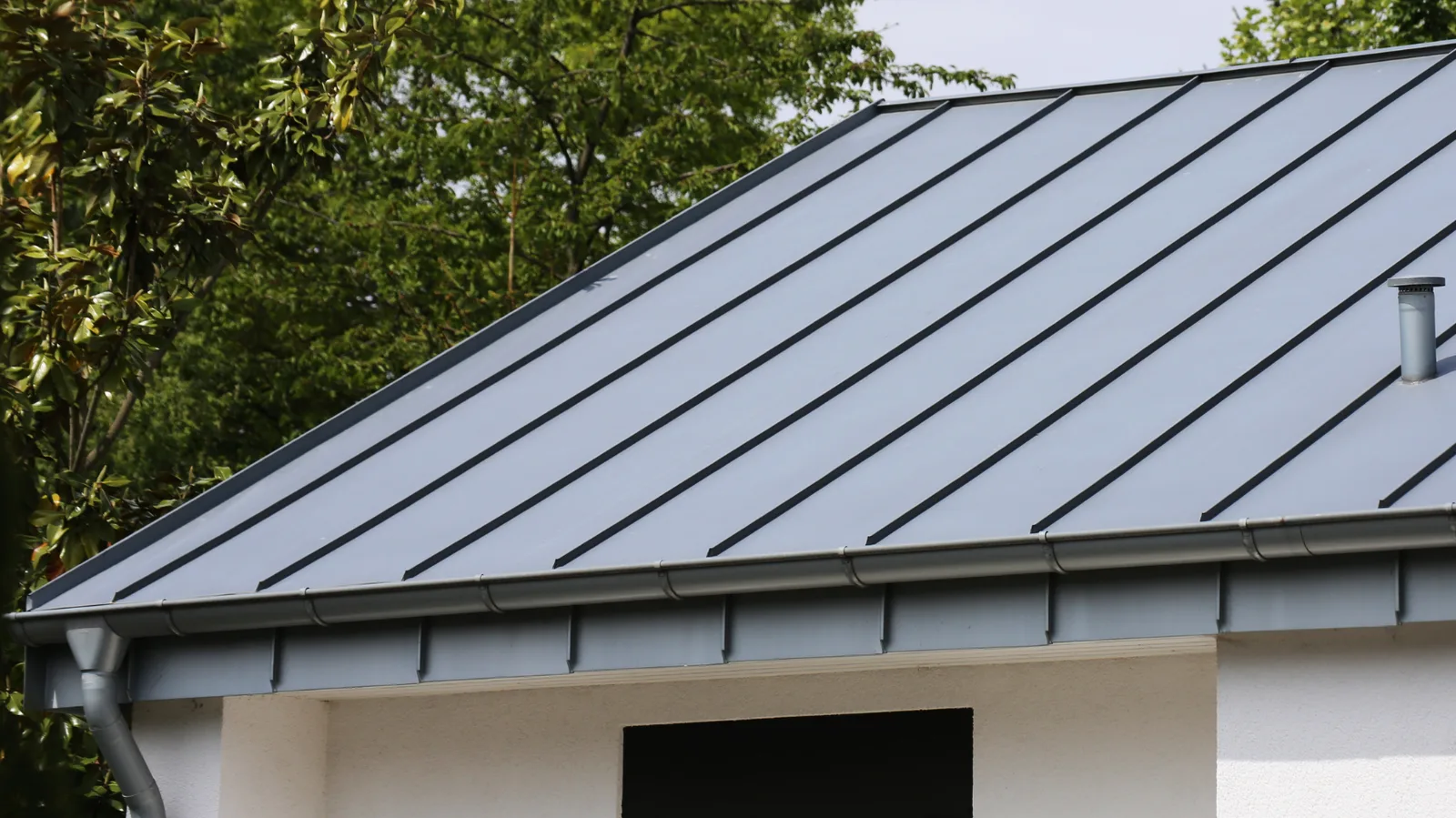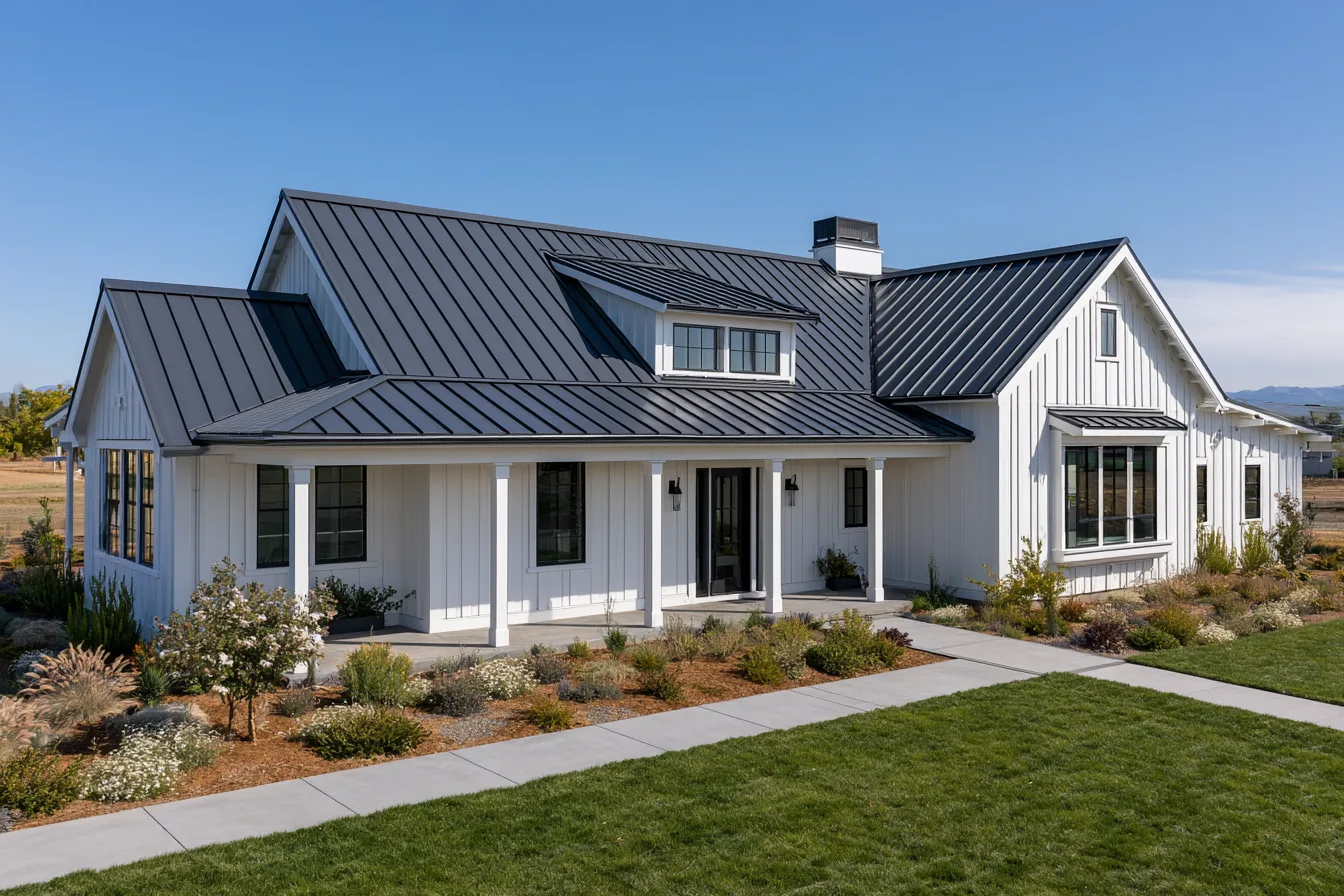
Metal Roofing in Wagoner, OK
Plan a metal roof around the panels, attachment and details that keep it working. Metal roofing and repair help for Wagoner properties starts with a free inspection.
Metal roofing choices for Wagoner properties
The long lines of a metal roof are easy to see. The details that make it work are less obvious: fasteners or clips, panel joints, closures, flashing and room for movement. Those parts need to suit both the chosen system and the roof underneath.
For an existing leak, we look at the panel and the connection that may be failing. A loose fastener is a different repair from a damaged seam or an incorrectly flashed pipe. For replacement, roof slope, deck condition and the shape of the building influence the system choice.
We explain the practical difference between panel types and the work at walls, valleys and edges. The goal is a compatible roof assembly, not simply a new surface over unresolved details.
Standing seam and exposed-fastener roofs
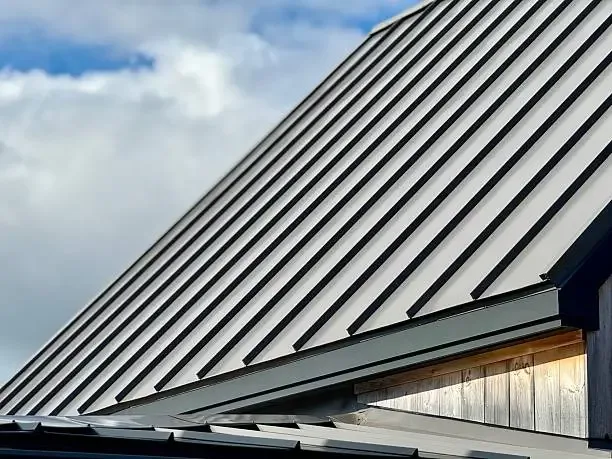
Panel categories carry different installation and maintenance needs. The roof inspection gives that comparison a useful starting point.
Standing-seam panels
Raised seams join the panels, with attachment details that vary by system. Concealed clips and seam design must accommodate the specified installation and movement. Panel length, roof pitch and penetrations affect both appearance and the work needed.
Exposed-fastener panels
Fasteners and sealing washers are visible through the panel. Their condition, location and connection to the base matter to water resistance. Aging washers, loose fasteners or enlarged holes can need repair; tightening every screw blindly can make a damaged connection worse.
Match the system to the roof
A profile’s appearance does not establish that it suits a particular slope. Manufacturer requirements, roof geometry, substrate and local requirements all matter. Some areas may need a different system or detail from the main slope.
Metal roof details that need careful work
Metal roofing details have to handle runoff, attachment and movement together.
Valleys and roof-to-wall details
Water concentrated in a valley needs adequate space and correctly connected flashing. Wall transitions, end laps and closures must work with the panel profile. A generic patch can obstruct drainage or leave an unprotected opening.
Penetrations and compatible materials
Pipe boots, equipment supports and other openings need details intended for the panel and its movement. Incompatible metals or sealants can create new problems. The repair material needs to be chosen for the actual system.
Edges, ridges and the supporting base
Eaves, rake edges and ridges need sound attachment and weather closures where required. Deck condition and the arrangement beneath the panels affect the installation. An attractive surface does not make a weak or wet base suitable to retain.
What changes a Wagoner metal roof budget
Metal replacement needs its own measured scope. The asphalt range in our calculator is not a metal-roof price. Discuss the panel system and complete details before using a figure as a project budget.
Wagoner metal roofing FAQs
Can a metal roof be installed over shingles?
That depends on the existing roof, concealed condition, system requirements and applicable rules. An overlay can leave defects hidden and complicate details. We assess the assembly before proposing whether the old covering can remain.
Can loose screws be the cause of a leak?
Yes. A loose fastener, damaged washer or enlarged hole can admit water on an exposed-fastener system. The surrounding panel and substrate determine the repair; simply overtightening a screw can damage the washer or fail to restore its hold.
Does a metal roof need maintenance?
Yes. Debris, penetrations, flashings and attachments still need attention. The checks depend on the system.