Emergency Roof Repair in Wagoner, OK
Water coming in or roofing torn open needs attention. Call (918) 201-0190 and tell us what is happening at your Wagoner property.
Active roof leaks in Wagoner
An active roof leak can affect the room below before the opening is obvious outside. Call and say where the water is entering, whether roofing is missing and whether there is a safety concern. You do not need to identify the failed component first.
Stay off the roof. Keep people away from a bulging ceiling, fallen debris and wet electrical equipment. Move belongings only if it is safe to do so. A hazardous structure, live wire or injury needs the appropriate emergency response.
Roof access and temporary protection depend on the weather and condition of the building. Call to discuss the immediate concern and the next available roofing step.
Temporary roof protection and its limits
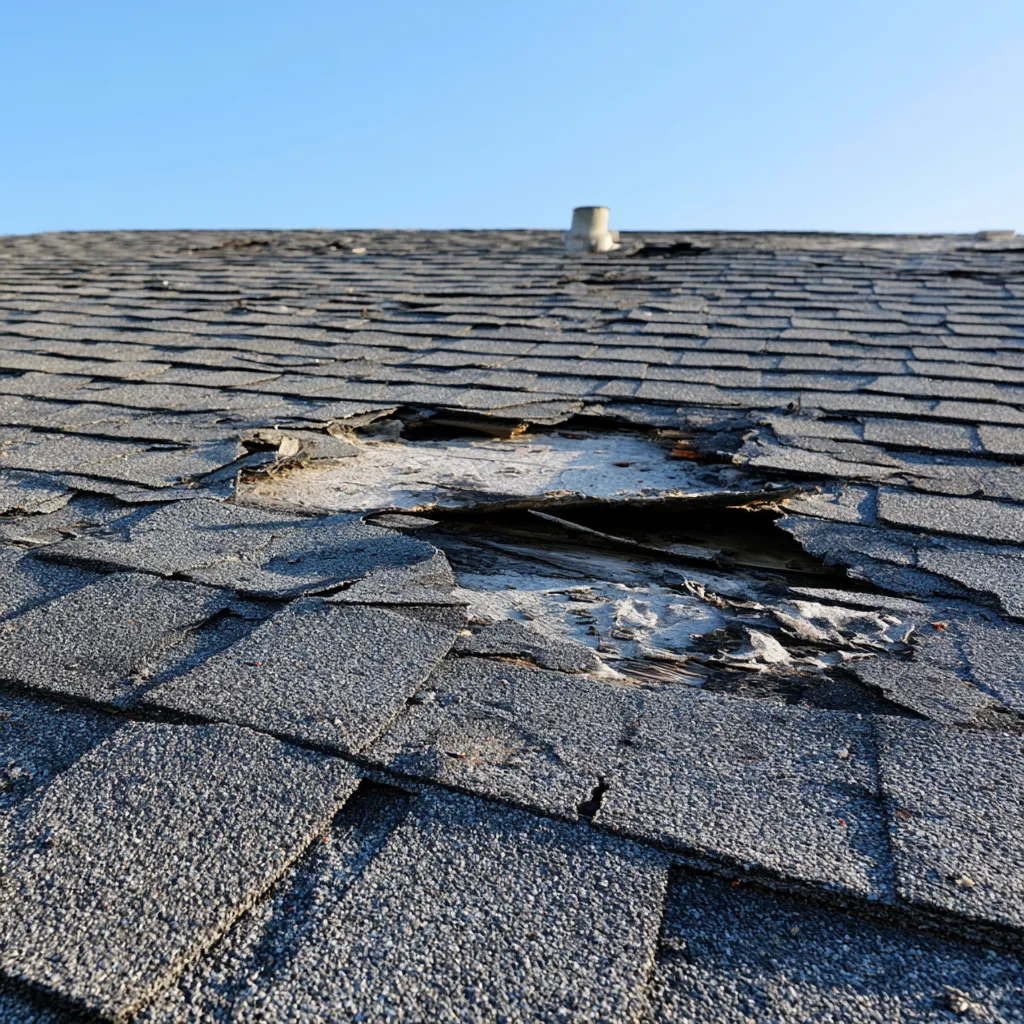
Temporary protection has a specific job: reduce additional entry while the roof can be assessed and repaired.
Cover an exposed area where it is safe
A tarp or other temporary measure needs suitable placement and attachment. Wet surfaces, wind, unstable decking and the shape of the opening can limit what is safe or effective. It is not a task to improvise from a ladder during the storm.
Recognize what remains underneath
A temporary covering does not remove wet insulation, strengthen damaged wood or reconnect permanent flashing. Those conditions belong in the lasting repair scope once they can be examined.
Account for more than one water path
Water may be entering at several locations or traveling from a wall or rooftop unit. Covering the most visible opening may not address every source. Continued water entry needs to be reported, not treated as proof that a tarp has repaired the roof.
From urgent protection to the permanent repair
Describe the current problem
Start with the address, indoor location of water and any known access hazard. Mention occupied work areas, gates or equipment that affect reaching the roof.
Assess access and protect the opening
The roofer evaluates what can be reached safely and what temporary measure fits the opening. Immediate protection and permanent roof work may happen as separate stages.
Open and restore the affected assembly
The lasting repair reaches sound material, addresses damaged layers and rebuilds the water-shedding connections. If the surrounding roof is broadly deteriorated, a wider replacement discussion may be necessary.
Protect people and preserve useful storm information
- Electrical and ceiling hazards come first
Do not touch a wet light, outlet or electrical panel, and keep clear of sagging ceiling material. Do not attempt to puncture a ceiling or enter an unsafe attic to follow the leak.
- Use observations you already have
When it is safe, note where and when water appeared. Existing photographs and receipts for temporary protection can help with the repair and any insurer discussion. Safety comes before gathering pictures.
- Plan the interior work after the source
A dry-looking stain is not evidence that the roof is fixed or that concealed materials are dry. Address water entry and affected layers before closing or refinishing the indoor area. Other restoration work may be needed separately.
Urgent roof repair FAQs
Can I put a tarp on the roof myself?
Stay off a damaged or wet roof. Wind, hidden weak decking and slippery surfaces can make tarp work hazardous. Call to discuss the opening and safe protection options.
What if water is near a light fixture?
Keep people away and do not touch the fixture or nearby wet electrical equipment. An electrical hazard needs qualified emergency or electrical help; roof repair alone does not make the fixture safe.
Will temporary protection stop every leak?
No. Effectiveness depends on the opening, conditions and whether there are additional water paths. Temporary protection is a holding measure, followed by assessment and the permanent repair.