
Roof Leak Repair in Wagoner, OK
A ceiling stain marks where water showed up, not necessarily where it entered. Get help tracing and repairing a roof leak in Wagoner with a free inspection.
Finding the opening behind a Wagoner roof leak
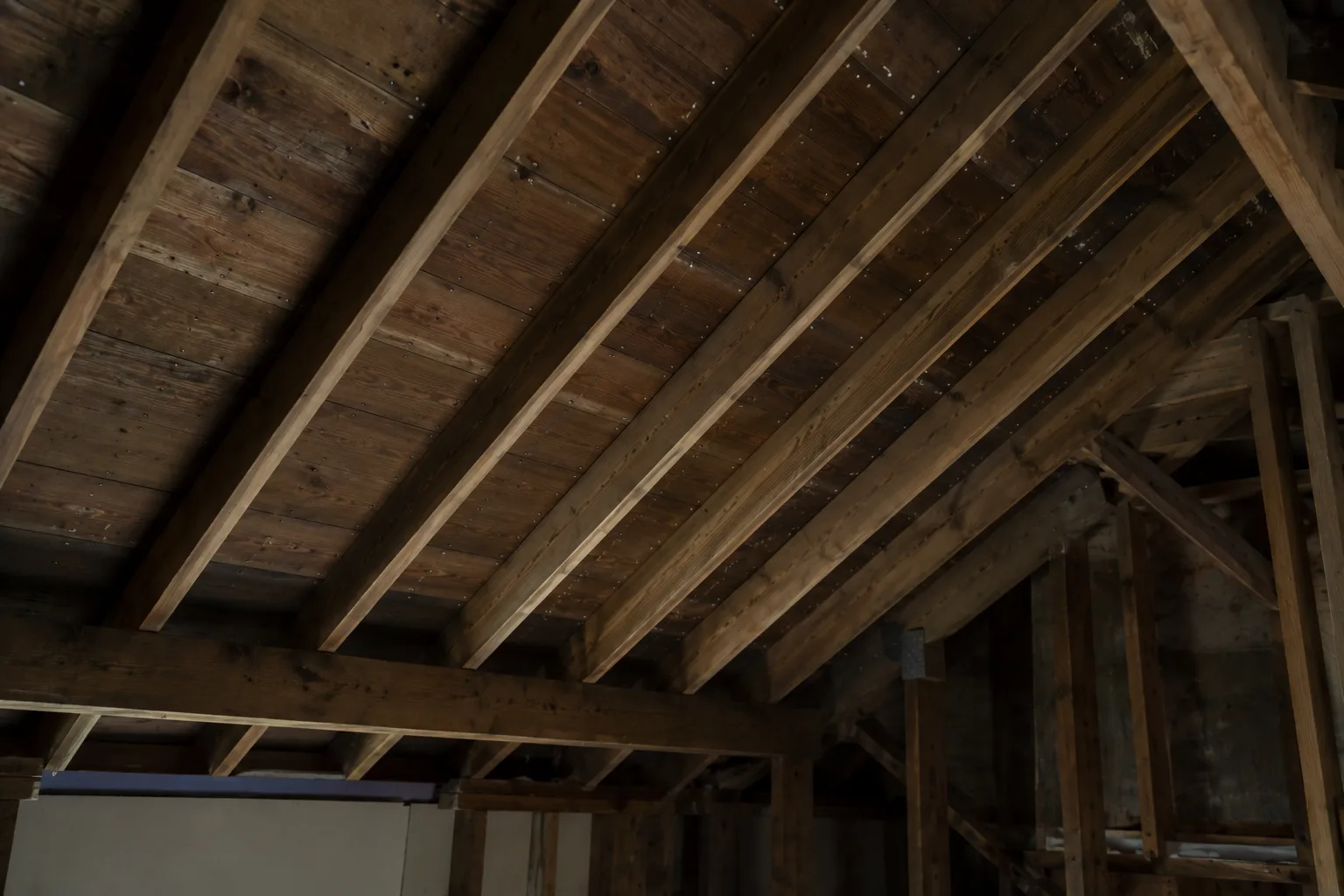
A drip can appear several feet from the roof opening. Water can run beneath the covering, follow the underside of decking or move along framing before it reaches the ceiling. Repairing only the roof directly above the stain can leave the entry point untouched.
We use the indoor location and the conditions when water appears as clues, then examine likely roof paths. Rain direction, a nearby wall, a vent or a valley can change the route. Access to the underside, when available and safe, may help connect the observations.
The aim is to identify the entry, the path and the affected material. That gives the repair a physical scope instead of treating the stain as the full problem.
Leak paths at roof vents, walls and valleys
Water follows laps and openings. These details often need to be examined together, especially uphill from the indoor symptom.
Pipe boots and roof vents
A split collar, damaged flange or failed connection to the shingles can let water pass around a penetration. A repair needs to fit the pipe or vent and reconnect the surrounding roof, rather than simply cover the visible gap.
Walls and chimney bases
Water can enter behind a wall-to-roof connection and travel before reaching the room. Step flashing, counterflashing, siding clearance and the surface above the roof all affect that path. Masonry or wall leakage may require separate work.
Valleys, changes in pitch and additions
Concentrated runoff travels through valleys and across roof transitions. An incorrectly lapped detail or unsuitable covering on a shallow section can admit water even while nearby shingles look intact. Each connection needs a route that carries water outward.
A roof leak or another source of moisture?
A wet ceiling deserves attention, but the source is not always the roof covering.
Rain enters through the roof
Water associated with rainfall can point toward a roof opening, flashing defect or wall connection. Wind direction can expose a weak detail that stays dry in a lighter rain. The timing helps locate the path; it does not establish the cause alone.
Water comes from plumbing or equipment
A pipe, appliance or air-conditioning drain can leak near the same room. Moisture that appears independently of rain needs that possibility considered. If the source belongs to another system, that system needs the appropriate trade.
Moisture condenses inside
Warm, moist indoor air can reach colder roof surfaces and condense. Air leakage, insulation and attic airflow then matter. Adding caulk to the exterior roof cannot correct an indoor moisture source or an obstructed attic air path.
Repairing the entry point and affected layers
Connect the inside symptom to the outside detail
We start with what you already know about the leak and inspect the roof where safe. The investigation may need to follow the path beyond the obvious stain or open a limited area to see concealed material.
Repair the opening and damaged layers
Failed flashing, covering or a penetration detail needs a compatible repair. Wet or deteriorated material beneath it changes how far the work must extend. A sound tie-in requires sound adjacent roofing.
Separate roof repair from interior restoration
Once entry is addressed, affected indoor material still needs assessment and drying or replacement as appropriate. Repainting before the source and moisture are resolved can hide the symptom while the problem continues.
Wagoner roof leaks FAQs
Why does my roof leak only in windy rain?
Wind can drive rain toward a wall, under an exposed lap or into a vulnerable vent detail from a direction that ordinary rain does not reach. The inspection uses that pattern to narrow the search. It still needs to establish the actual opening and water path.
Does the ceiling need repair before the roof?
Address active entry and safety concerns first. Damaged interior material may need removal or other attention, but final ceiling repair should follow resolution of the source and assessment of remaining moisture. Roof and interior work are separate parts of restoring the room.
Can a new roof still leak?
Yes. A new covering can still leak at a poorly connected flashing, penetration or transition, or the moisture may originate in a wall or another system. The age of the roof does not remove the need to trace the source.