Roof Ventilation in Wagoner, OK
A ventilated attic needs a clear route for air to enter and leave. We assess roof ventilation in Wagoner as part of the roof and attic assembly.
Roof ventilation for Wagoner homes
Adding a vent at the ridge is not enough if air cannot enter lower down. In a vented attic, intake near the eaves and exhaust near the upper roof work together. Blocked soffits, disconnected attic spaces or an unsuitable mix of vents can interrupt that route.
Heat or moisture in an attic deserves a look at the whole assembly. The roof vents are one part of it; insulation, air leaks from indoors and moisture sources can also affect conditions. A roof leak is a separate possible source that needs examination.
We discuss the vent arrangement and accessible air paths alongside the roof work. The right solution follows the attic configuration and selected roof system, rather than adding the largest number of vents.
Intake, exhaust and blocked air paths
GAF’s ventilation guidance describes intake and exhaust as a balanced system. The actual design depends on attic area, usable openings and the roof configuration.
Intake at the eaves
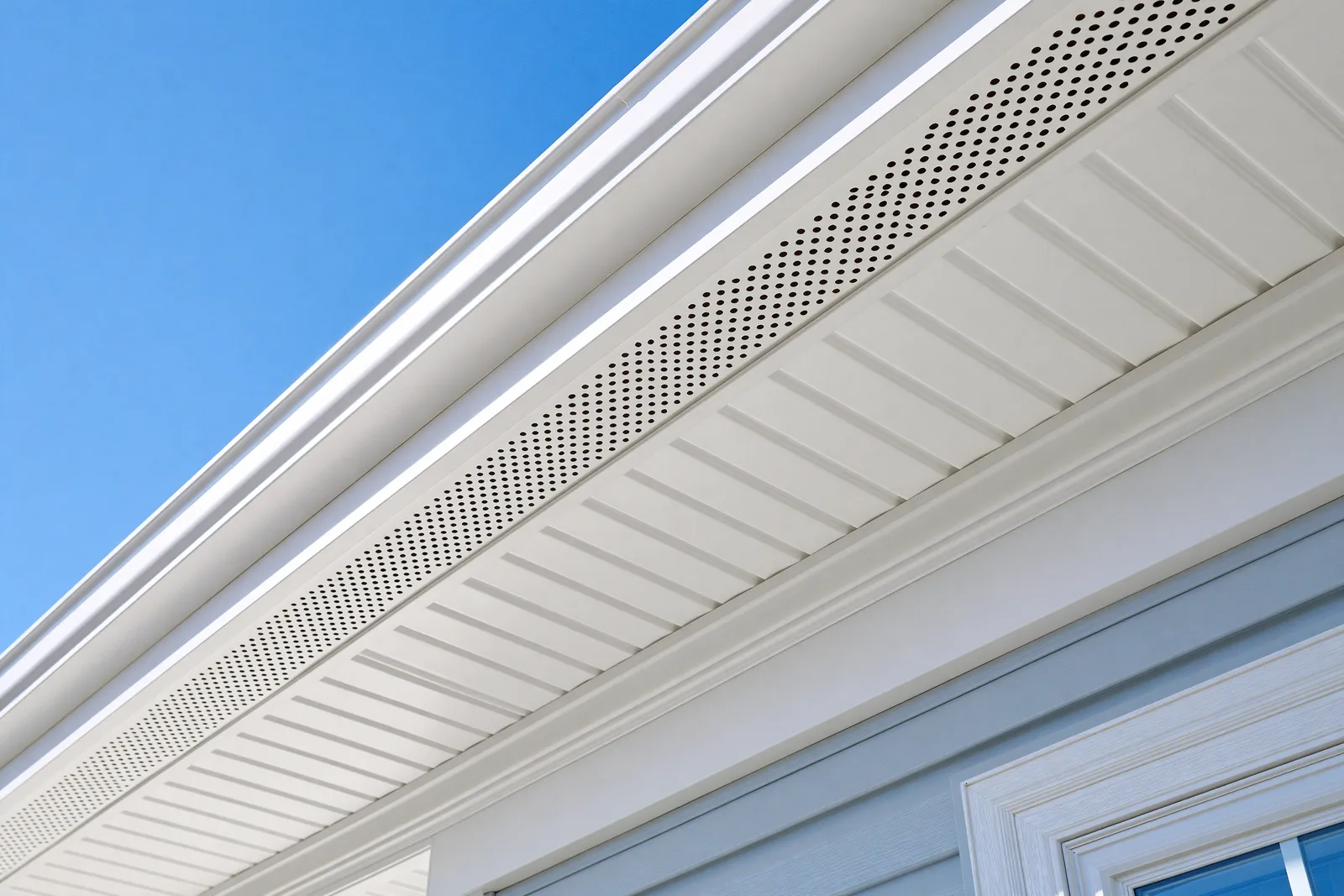
Perforated soffit or another designed inlet needs an open path into the attic. Paint, debris or insulation can obstruct that path. Baffles may be needed where insulation meets the roof framing so the intended air channel remains clear.
Exhaust at the upper roof
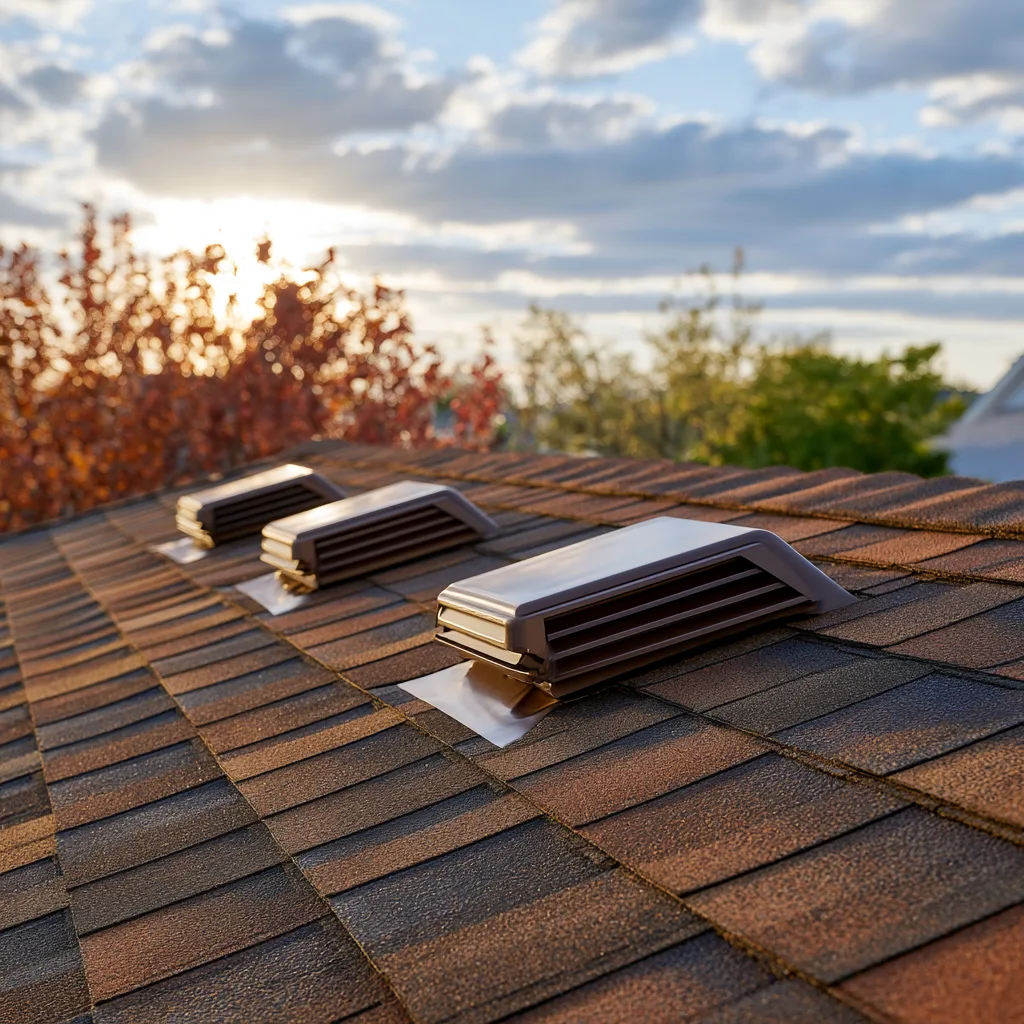
Ridge vents, box vents and other exhaust products have different requirements. Location, available ridge length and net free vent area matter. A decorative ridge cap does not establish that the opening beneath it is correctly formed.
Connections between attic spaces
Additions, hips and framing can divide attic spaces or restrict airflow. A vent serving one section does not necessarily ventilate another. The inspection should account for those breaks instead of sizing every roof as one open attic.
Ventilation, moisture and insulation
A hot or damp attic can have more than one contributing cause. The work should match the source.
A ventilation path is restricted
Blocked intake or an unsuitable exhaust arrangement can need roof or soffit work. The correction should restore the intended path and protect openings from weather.
Moist indoor air reaches the attic
Air leaks around ceiling openings or improperly routed exhaust can add moisture. Air sealing or correction of that source may be needed separately. Roof ventilation alone does not eliminate indoor moisture entering the assembly.
Insulation or water entry needs attention
Insulation gaps and roof leaks can affect attic conditions independently of vent capacity. Those problems need to be identified and addressed rather than concealed behind a new vent installation.
Include ventilation in the roof scope
Review the roof and accessible attic arrangement
The inspection considers intake, exhaust and any obvious obstructions, with access discussed in advance. Concealed or inaccessible areas remain limits to the initial assessment.
Coordinate vents with the roof system
During replacement, the vent layout can be planned with ridge details, penetrations and the selected covering. On an existing roof, any new opening needs compatible flashing and a sound connection to the surrounding material.
Explain related work and ongoing care
If air sealing, insulation or a separate moisture source needs attention, that is identified as related work. Intake and exhaust openings need to stay clear after the roofing work is complete.
Wagoner roof ventilation FAQs
Will a ridge vent work without intake vents?
A ridge vent needs suitable intake and an open air path to work as intended. Without them, adding exhaust may not address the attic problem. The balance and the actual configuration need to be assessed.
Can more vents cause problems?
Yes. Mixing exhaust types or adding exhaust without adequate intake can disrupt the intended airflow. The useful measure is a compatible, properly arranged system, not the number of vents.
Does attic heat mean the roof needs replacing?
No. Attic heat alone does not establish that the covering has failed. Ventilation, insulation and air leakage deserve attention, while the roof’s condition determines whether repair or replacement is needed.