Chimney Flashing Repair in Wagoner, OK
Water beside a chimney can start where masonry meets the roof. We inspect and repair chimney flashing in Wagoner, with attention to the metal, shingles and adjoining surfaces.
Chimney flashing repairs in Wagoner
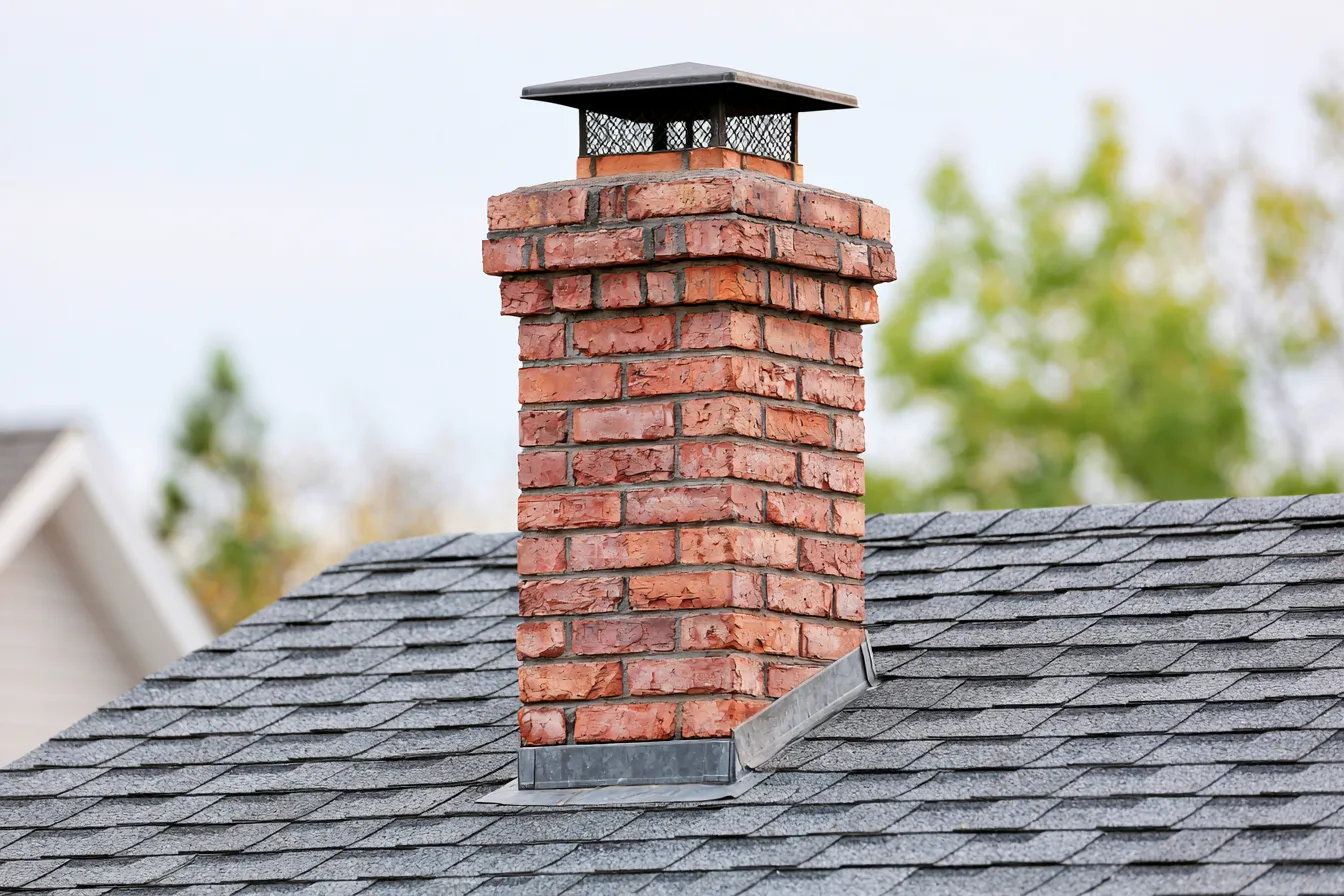
A chimney interrupts the roof’s normal water path. Rain has to travel around its base and back onto the covering without entering the joint between masonry and shingles. Several pieces of flashing work together to make that happen.
Water near the fireplace or chimney does not prove which piece failed. It can enter at the roof connection, through deteriorated masonry or from the crown higher up. The inspection needs to distinguish those sources before the repair is chosen.
We look at how the roof meets the chimney and whether the adjacent covering can be opened and reconnected. A flashing repair can remain local when those surrounding materials are sound.
Step flashing, counterflashing and the uphill side
A sound repair treats the chimney base as a connected assembly.
Step flashing along the sides
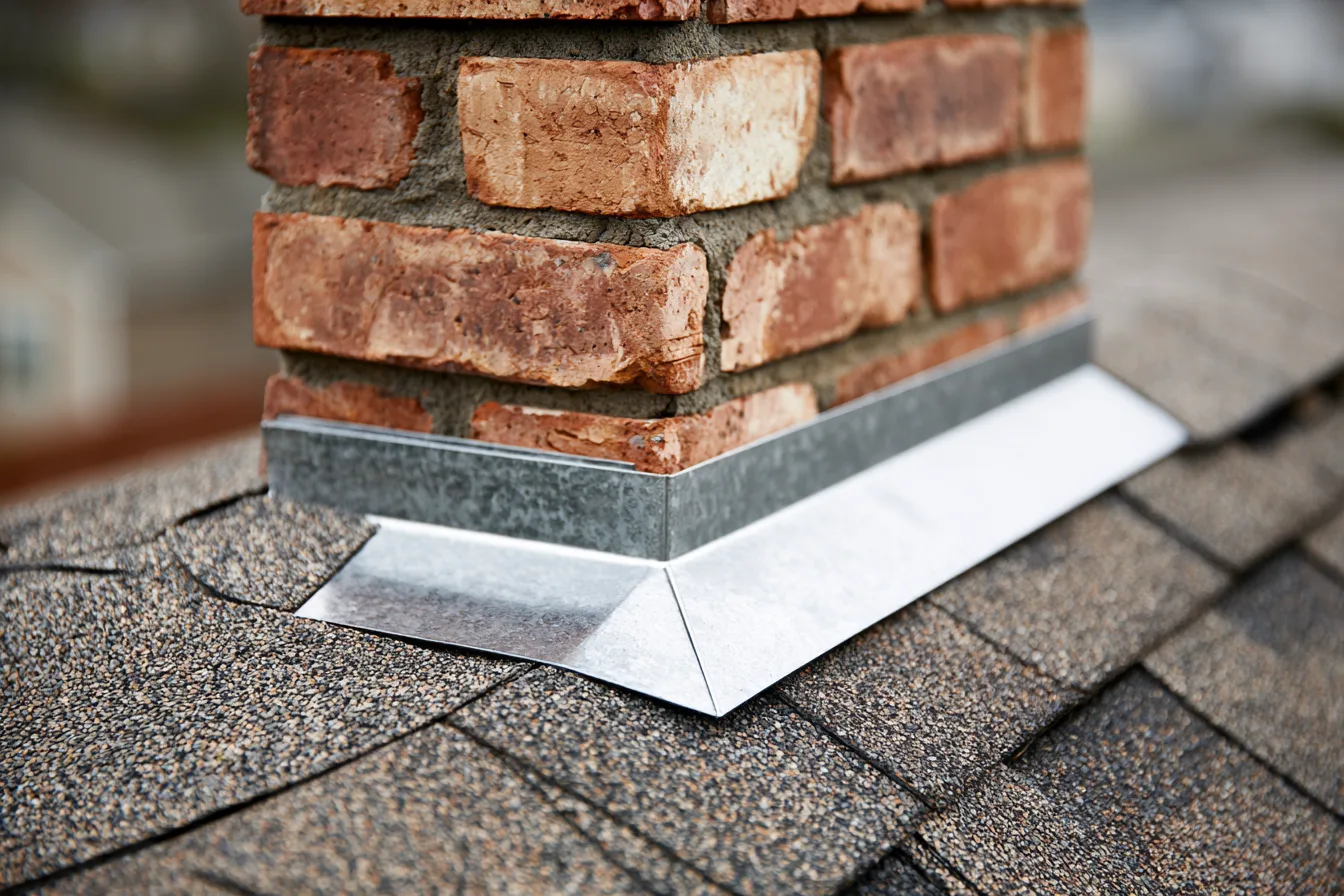
Individual flashing pieces overlap with shingle courses to carry water down the roof. Missing, damaged or poorly lapped pieces can admit water behind the covering. A bead of sealant on the outside cannot recreate that layered connection.
Counterflashing against the masonry
Counterflashing protects the upper edge of the base flashing where it meets the chimney. Its attachment and connection to the masonry need to resist entry while allowing the roof detail to work. Loose metal or deteriorated joints need more than cosmetic covering.
The uphill side and water diversion
Water collects against the back of a chimney before moving around it. The uphill flashing and, where appropriate, a cricket or saddle direct that flow. Chimney width, roof slope and applicable requirements determine the detail; not every chimney uses the same shape.
Roofing work and chimney masonry work
The roof-to-chimney joint is only one possible source of moisture.
Flashing or adjacent roof failure
An open lap, damaged metal or failed shingle connection calls for roofing work. The repair must extend far enough to replace the failed detail and join sound material around it.
Masonry, crown or cap trouble
Cracked masonry, deteriorated mortar or damage higher on the chimney can allow water in above otherwise sound flashing. Those conditions may need a masonry or chimney specialist. Replacing roof metal alone cannot fix a source above it.
More than one defect
A chimney can have both a worn roof connection and deteriorated masonry. The work needs to be coordinated so a new flashing detail is not left against a failing adjacent surface. Each part should be identified in the scope.
Opening and rebuilding the chimney roof connection
Inspect the roof joint and nearby surfaces
The leak location is considered alongside the sides, uphill area and visible masonry. Safe access and what is concealed affect how much can be established before opening the roof.
Open the covering to reach the flashing
Shingles may need to be lifted or removed to rebuild the metal connections. Brittle material or damage beneath the joint can widen the work. Replacement shingles may not be an exact color match to the weathered roof.
Reconnect the water-shedding layers
Compatible metal, correct laps and sound adjoining material are central to the repair. Any separate masonry work needs an appropriate sequence so the finished joint stays properly connected.
Chimney flashing FAQs
Is caulk enough to fix chimney flashing?
Sealant can be part of a specified flashing detail, but it is not a substitute for missing, damaged or wrongly lapped metal. The repair should address the failed connection beneath the surface bead.
Can flashing be repaired without a new roof?
Often a local repair is possible when the surrounding covering and deck are sound and workable. Brittle shingles or deterioration extending beyond the chimney can make a larger area necessary.
Does every chimney need a cricket?
No single detail fits every chimney. Width, roof slope, water flow and applicable requirements determine whether a cricket is needed. The uphill connection still needs to divert water properly.